Specifying a product may seem straightforward, but is it really?
from EETimes: http://ift.tt/11H2rwn
via Yuichun
from EETimes: http://ift.tt/11H2rwn
via Yuichun
Dave shows you how to rework and replace a blown SSOP surface mount SMD chip with ChipQuik, solder wick, and drag soldering. And also mentions other methods using a hot air gun and pre-heater.
Can he fix the Back To The Future Time Circuits and restore the timeline to it’s original order?
Bonus rant about the lack of PDF schematics in Github projects.
The BTTF Time Circuits were designs and made by Shackspace
Video of Dave blowing up the Time Circuits:
Forum HERE
Graphics processor firm Nvidia sees a big opportunity for its GPUs in high performance computing (HPC), sometimes referred to as supercomputing.
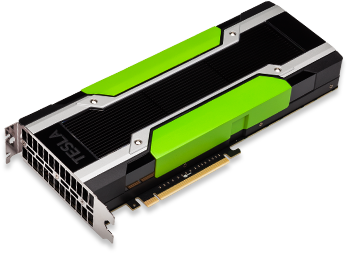
Nvidia-Tesla-K80
GPUs differ from the CPUs of Intel, IBM and AMD used in PCs and servers because they at every good at number-crunching. That is GPUs are designed to process data very quickly, but do not have the programmable flexibility of CPUs.
Maybe a decade ago research showed that by using many GPUs in a low latency (ie with high speed interconnect) it was possible to create a powerful number-crunching supercomputer for a fraction of the cost of bespoke HPC hardware.
Nvidia has seized the opportunity. It designed a new type of high-end GPU called Tesla, which was good at being cascaded in an HPC array.
Part of the Tesla Accelerated Computing Platform, K80 dual-GPU accelerator is designed for number-crunching operations such as machine learning, data analytics, and scientific computing – collectively known as HPC.
In Tesla there are two GPUs per board with 12Gbyte of GDDR5 memory each (12Gbyte/board). Memory bandwidth is 480Gbyte/s.
There are 4,992 CUDA parallel processing cores.
But Nvidia is not only relying on Tesla for its HPC strategy. It has a plan to create an HPC from 2,000 Tegra K1 mobile processors.
Nvidia is working with IDT and Orange Silicon Valley to develop a scalable, low-latency cluster Tegra K1 mobile processors using RapidIO interconnect to create 16Gbit/s data interfaces between processor nodes.
There will be 60 processor nodes on a 19-inch 1U board, with more than 2,000 nodes in a rack.
This can provide computing power of up to 23Tflops per 1U server, or greater than 800Tflops of computing per rack.
This is twice the computing density of the largest supercomputer, Tianhe-2 in China.
“By integrating a large volume of low-power GPUs in a server rack at scale, this industry first creates a clear path to massive cloud-based clusters for analytics and gaming,” commented Jag Bolaria of the Linley Group.
